
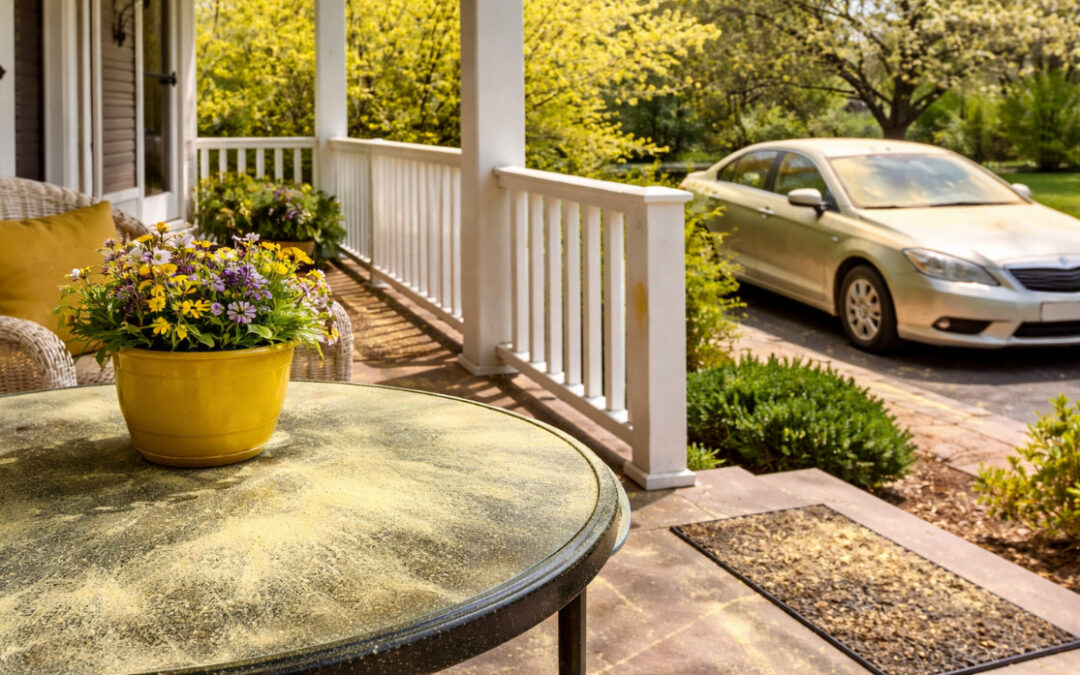
Ah, the North Carolina spring: One week, the weather turns nice. The next, everything is covered in a fine layer of yellow pollen. You clean your home, feel good about it for a day… and then it’s right back where it started.
Across Greensboro, Winston-Salem, High Point, and even smaller areas like Mocksville and Burlington, homeowners run into the same frustrating cycle every year. Surfaces get dusty faster. The air feels heavier. And no matter how often you clean, it never quite feels like you’re getting ahead of it.
First things first, it’s important to think about this in terms of an overall system you’re creating.
Because pollen is an ongoing challenge throughout spring, controlling it isn’t a one-off thing you can set aside a weekend for and simply knock out. (Unfortunately.)
Let’s walk through what that looks like.
Step 1: Reset Your Home with a Deep Clean
Before you can stay ahead of spring dust and pollen, you need a clean starting point.
This is where a lot of people fall short. They try to maintain a home that was never fully reset to begin with. And during spring in North Carolina, that means you’re always working against leftover buildup.
A proper reset is about removing the dust, pollen, and debris that have settled into the areas most people don’t clean regularly. See also: Why Your Home Gets So Dusty
Start from the top and work your way down:
- Ceiling fans and light fixtures, where fine dust collects and gets pushed back into the air.
Tip: Use a slightly damp microfiber cloth and wipe from the inside of the blade outward. This helps trap dust instead of knocking it loose into the room (or onto you). - Air vents and return grilles, which often hold visible buildup and circulate particles throughout the home. Tip: Vacuum first with a brush attachment, then wipe. Skipping the vacuum step tends to smear dust rather than remove it.
- Baseboards, trim, and windowsills, where pollen tends to settle unnoticed. Tip: A damp cloth works better than dry dusting here. It grabs fine particles instead of pushing them around.
- Behind and underneath furniture, where dust accumulates over time. These areas matter more than they seem. Air movement pulls dust from these hidden zones back into your living space.
From there, shift your focus to soft surfaces:
- Upholstery
- Rugs and carpets
- Bedding and pillows
- Curtains or blinds
These materials trap airborne particles and continue releasing them into the air long after surfaces have been wiped down.
Pro Tip: If your home still feels dusty after cleaning, fabric is often the reason. Soft surfaces are one of the biggest areas dust collects, and aren’t always addressed fully.
The goal of this phase isn’t perfection. It’s to remove as much of the existing buildup as possible so you’re not constantly fighting what’s already there.
Once your home has been reset, everything you do next becomes more effective and easier to maintain.
Step 2: Control What Comes Into Your Home
Once your home has been reset, the next step is limiting how much dust and pollen make it inside in the first place.
This is one of the biggest differences between homes that feel consistently clean and those that don’t. It’s not just about how often you clean. It’s about how much you’re allowing in every day.
During spring in North Carolina, you’re dealing with a constant stream of pollen, dust, and debris. If there’s no system to control that flow, it doesn’t matter how well you cleaned yesterday.
↪ Entryways Are Your First Line of Defense
Most of what ends up inside your home comes through the front door, garage, or back entrance.
A few small changes here can make a noticeable difference:
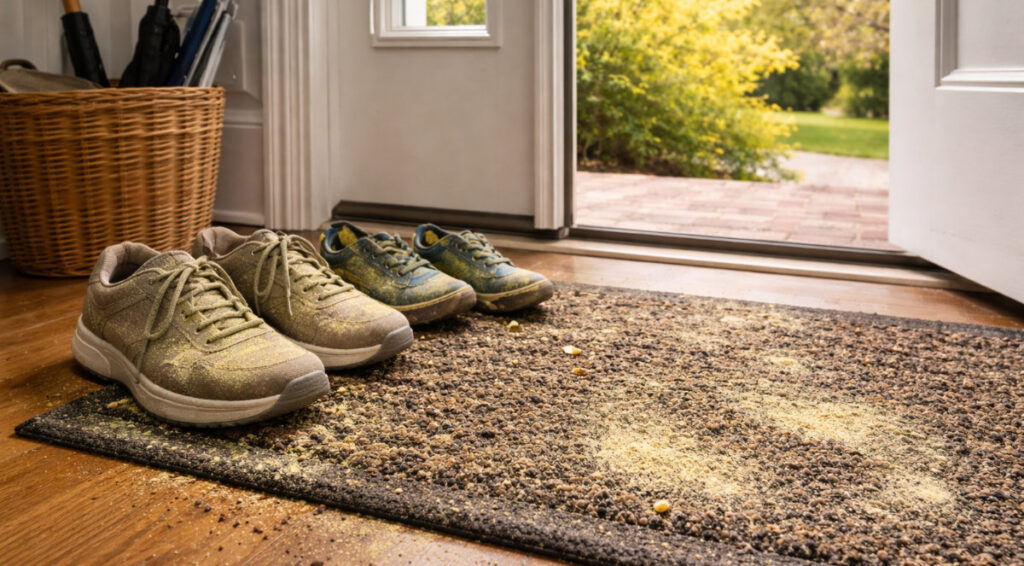
- Use door mats both outside and inside
Tip: The outside mat loosens debris, the inside mat catches what’s left. Skipping one reduces the effectiveness of both. - Be intentional about shoes
Tip: Shoes track in more than visible dirt. They carry fine dust, pollen, and oils that settle into floors and carpets. Even a simple habit of removing shoes at the door can significantly reduce buildup. - Wipe or brush off pets before they settle in
Tip: A quick wipe of paws and a light brush of fur can prevent pollen from spreading across floors and furniture.
↪ Be Strategic with Windows and Airflow
Opening windows on a nice spring day feels great—but it’s one of the fastest ways to bring pollen indoors.
That doesn’t mean you can never open them. It just means being more intentional.
- Limit open windows during peak pollen times (typically mid-morning through early afternoon).
- Open windows after rain, when pollen levels tend to be lower.
- Avoid opening windows on high-wind days, when airborne debris is at its worst.
Tip: If you notice a layer of dust forming shortly after airing out your home, open windows may be a bigger contributor than you realize.
↪ Create Small Habits That Add Up
You don’t need a complicated system to make a difference. Just a few consistent habits:
- Wipe down high-contact surfaces more frequently during peak pollen weeks
- Do quick floor touch-ups in entry areas instead of waiting for a full cleaning
- Keep a cloth or wipes near main entrances for easy access
Tip: It’s often easier to spend 2–3 minutes controlling buildup daily than 30–60 minutes trying to catch up later.
Step 3: Manage the Air Quality Inside Your Home
In North Carolina, especially during spring, your indoor air is constantly interacting with pollen, dust, and other fine particles. And much of that movement is driven by your HVAC system.
This is true even after you’ve done a deep clean of your surfaces.
Your system pulls air in, conditions it, and pushes it back out through your home. If that air is carrying dust and pollen — or if your system isn’t filtering effectively — you’re simply redistributing particles from one room to another.
↪ Stay Ahead of Your HVAC Filters
Your air filter is your first line of defense, but it only works if it’s clean.
- Check filters more often during spring, not just once a season
- Replace them regularly, especially during peak pollen weeks
Tip: If your home starts feeling dusty again quickly or airflow seems weaker, your filter may already be overloaded—even if it hasn’t been that long. Filters fill up much more quickly in pollen season than other points of the year.
↪ Keep an Eye On Vents and Returns
Even with a clean filter, buildup around vents and returns can affect how air moves through your home.
- Dust can collect on vent covers and get blown back into the room
- Return vents can pull in debris from surrounding surfaces
Tip: Vacuum vents first, then wipe them down with a damp cloth. Cleaning without removing loose dust first tends to spread it instead of eliminating it.
↪ Pay Attention to Air Movement
Air doesn’t just sit still. It moves constantly—and it carries particles with it.
Simple things can influence that movement more than you might expect:
- Ceiling fans can redistribute dust if blades aren’t clean
- Opening and closing doors changes how air flows between rooms
- Running your HVAC system more frequently during pollen season increases circulation
Tip: If you notice dust collecting more heavily in certain rooms, it may be tied to airflow patterns rather than just cleaning habits.
Step 4: Build a Cleaning Rhythm That Keeps You Ahead
Once your home has been reset, your entry points are under control, and your air quality is working in your favor, the final step is building a rhythm you can realistically stick with.
Most homeowners struggle because the pace of buildup in the spring doesn’t match the pace of their routine. What worked in the winter simply isn’t enough once pollen and dust levels increase.
↪ Focus on Consistency Over Intensity
Instead of waiting for your home to feel dirty and then doing another full reset, it’s more effective to stay ahead of it with lighter, more frequent touch points.
- Quick wipe-downs of high-use surfaces
- Light vacuuming in main traffic areas
- Checking entry zones regularly
Tip: A 5–10 minute reset in key areas every couple of days can prevent the need for a much longer deep clean later.
↪ Prioritize the Areas That Build Up Fastest
Not every part of your home needs the same level of attention.
Focus your energy where it makes the biggest difference:
- Entryways and high-traffic zones
- Living areas where people and pets spend the most time
- Bedrooms, especially bedding and surrounding surfaces
Tip: If you’re short on time, start where dust shows up first. That’s usually where it’s entering or settling most heavily.
↪ Keep Your Tools Within Reach
One of the easiest ways to stay consistent is to reduce friction. Any aspect that feels like a mild inconvenience, especially looking for supplies or clothes, reduces the likelihood that you’ll bother with it.
- Keep cleaning supplies in the areas you use them most
- Store a cloth or wipes near entry points
- Make quick cleanups as convenient as possible
- Avoid all-or-nothing thinking.
Tip: If it takes effort to get started, it’s less likely to happen regularly. Stacking the deck in your favor makes a big difference over time.
When It Makes Sense to Bring in Help (And Why It’s Common in the Triad)
Between heavy pollen cycles, everyday foot traffic, pets, and air circulation, it doesn’t take long for dust to start settling back into your home. And for many homeowners across Greensboro, Winston-Salem, High Point, and surrounding areas like Mocksville and Burlington, the having a team come by to deep clean each week makes a big difference in air quality and allergens.
The extra help tames allergy symptoms, and makes the cleaning that homeowner does on their own in between far easier to manage.
If you feel overwhelmed with aspects of seasonal cleaning even after reading the above tips, it may make sense to tag in an experience team on an occasional or regular basis.