
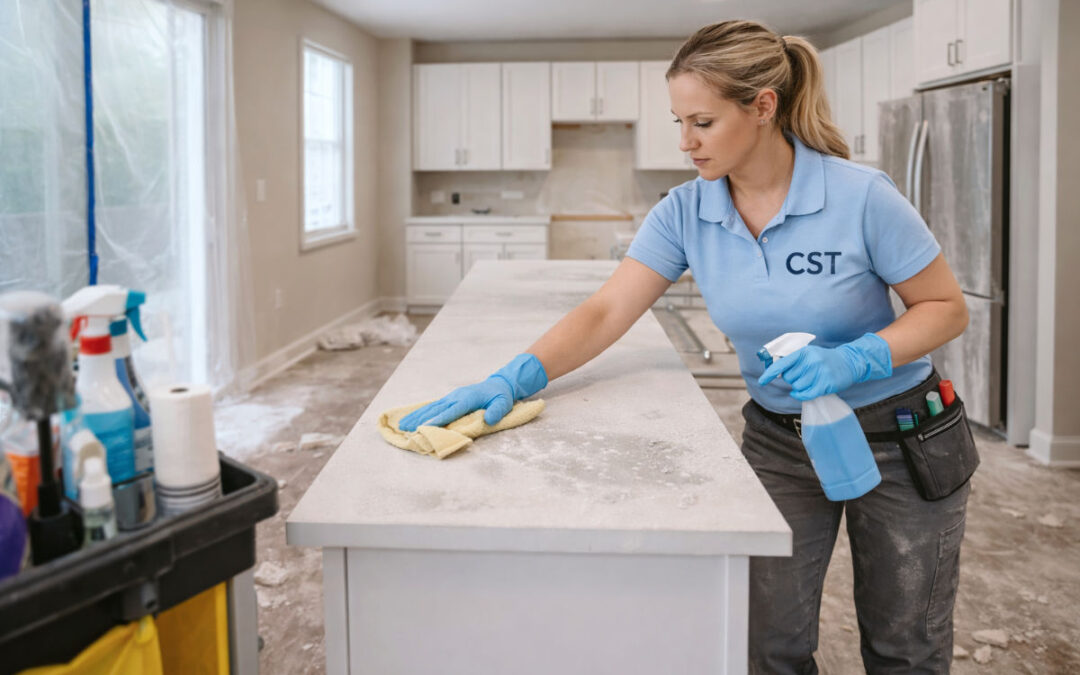
If you manage a property that’s recently gone through construction or renovation, you’ve probably seen this firsthand. The project wraps up, the final clean is completed, and the space looks ready… only for dust to start showing up again days or weeks later.
This can be especially frustrating once a building is handed off and back in use. HVAC systems are running, foot traffic increases, and spaces that were just cleaned begin collecting fine dust on floors, railings, and horizontal surfaces. It often feels like something was missed, even when the initial cleanup was done correctly.
The reality is that construction dust doesn’t behave like everyday dirt. And once a property moves from project mode to daily operation, the responsibility for managing that dust usually shifts to property management teams.
Why Construction Dust Is Different Than Everyday Dirt
Construction dust isn’t just surface-level debris. It’s made up of fine particles from drywall, concrete, wood, insulation, and other building materials. These particles are lighter, smaller, and more mobile than the dust generated through normal daily use of a space.
Because of that, construction dust doesn’t simply fall and stay put. It settles into cracks, vents, light fixtures, railings, and textured surfaces. It clings to walls, window frames, and unfinished edges. Even after visible debris is removed, microscopic particles can remain suspended in the air or tucked into areas that don’t immediately stand out.
This is why a space can look clean at first, but still release dust back into the environment over time. Walking through the space, running HVAC systems, or opening doors and windows can all stir those particles back into circulation.
How Dust Continues to Move After Construction Is Complete
Even after contractors leave and major debris is cleared, dust doesn’t stop moving. Airflow plays a major role in redistributing leftover particles throughout a space.
HVAC systems are a common contributor. These systems are usually turned off during construction. Once systems are turned back on, fine dust trapped in vents, returns, or ductwork can be pushed into newly cleaned areas. Foot traffic does the same thing, lifting particles from floors and corners and spreading them to adjacent rooms.
Vertical surfaces are another usual factor. Dust often settles on ledges, railings, door frames, stair edges, and wall textures. As the building is used, gravity and vibration slowly release that dust back onto floors and other surfaces.
Why One-Time Cleaning Often Falls Short
A single, thorough cleaning is an important step after construction, but it rarely addresses the full lifecycle of dust movement. Those initial cleanings remove visible debris and prepare the space for use, but they can’t always account for how dust continues to migrate once the building becomes active again.
The size and layout of the property can play into this as well.
Leftover dust accumulates gradually at that point, and creates the impression that cleaning missed things. The real issue is that the process stopped too early.
Fully planned post-construction cleaning accounts for this, treating it as a sequence rather than a finish line.
What a Multi-Phase Post-Construction Cleaning Approach Looks Like
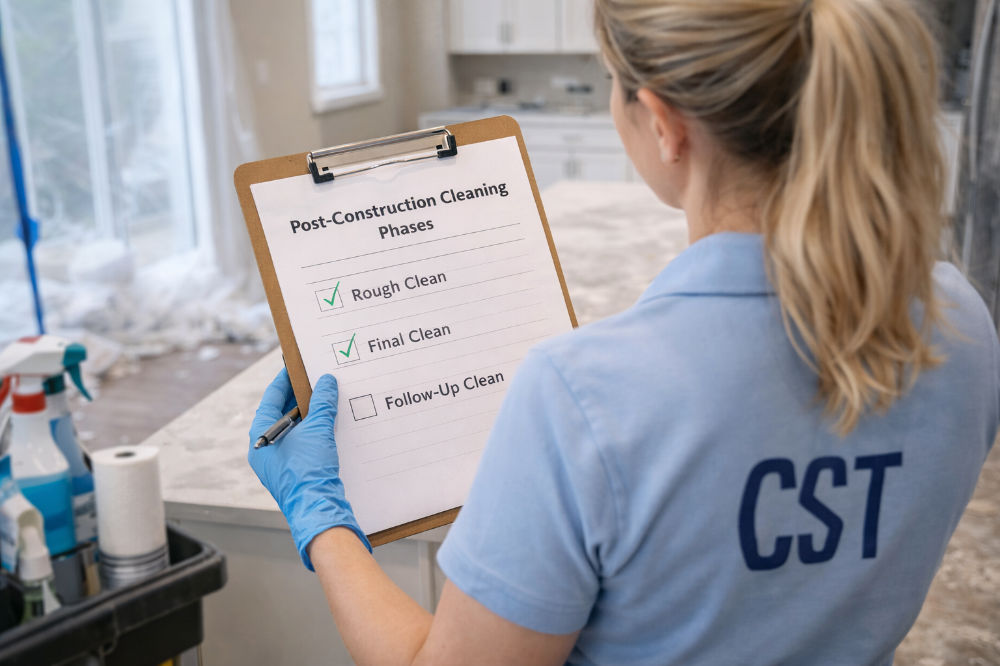
The first phase is typically a rough clean, which focuses on removing large debris, packaging materials, and obvious dust buildup. This stage clears the space so it’s safe and accessible for final work, inspections, or walkthroughs.
Next comes the final clean. This is where surfaces are detailed, floors are cleaned thoroughly, fixtures are wiped down, and the space is prepared for presentation or occupancy. At this point, the area looks finished, but dust movement hasn’t fully stopped yet.
The last phase is a follow-up clean, often scheduled days or weeks later. This step addresses fine dust that has resettled after HVAC systems are running, doors are being opened regularly, and people are moving through the space. It’s often lighter in scope but highly targeted, focusing on floors, horizontal surfaces, vents, railings, and entry points.
This phased approach helps ensure the space doesn’t just look clean once, but stays clean as it transitions into normal use. Ask your professional cleaner to help you determine what time frames make the most sense for the follow-up clean.
When Follow-Up Cleaning Makes the Biggest Difference
Follow-up cleaning is most effective when it’s timed to match how the space is being used.
One of the most common moments is after HVAC systems become fully operational. Once air is circulating consistently, any remaining dust in vents or returns has a chance to surface.
Another key moment is just before inspections, tours, or handoffs. Dust that settles after the final clean can undermine an otherwise strong presentation, especially in areas like stairwells, railings, window sills, and entryways.
In occupied properties or phased renovations, follow-up cleaning is especially valuable after foot traffic increases. As residents, staff, or contractors move through the area, settled dust can be redistributed quickly without additional cleaning support.
Planning for these moments ahead of time helps prevent reactive cleaning and ensures the space stays presentable through critical milestones.
With the right approach, post-construction cleaning becomes a process that supports the transition from project completion to everyday use, helping spaces feel truly ready rather than temporarily cleaned.